Best dome tents of 2026
- Updated October 30, 2026
- 11 models compared
- 9 min read

What is the best dome tent?
Dome tents are now the most widely used and have become the most popular in recent years, thanks to their light weight, quick and easy pitching and taking down, and their pole system.
They come in all sizes and are the most versatile. You can use them for festivals, for camping, for trekking, for a whole holiday on the road or even for your children to camp in the garden.
Dome tents (called “igloo” tents in Spain) are recognisable by their rounded shape, like a snow igloo.
They are so versatile that there are models for every season: 2, 3 or even 4-season dome tents. Their shape also makes them very resistant to bad weather such as heavy rain or blizzards.
If you’re looking for a good-quality all-round tent, here is our selection of the best dome tents.
On to the selection!
Best-rated and best-selling dome tents on Amazon
Comparison of the best of 2026
| Product | Stands out for | Price |
|---|---|---|
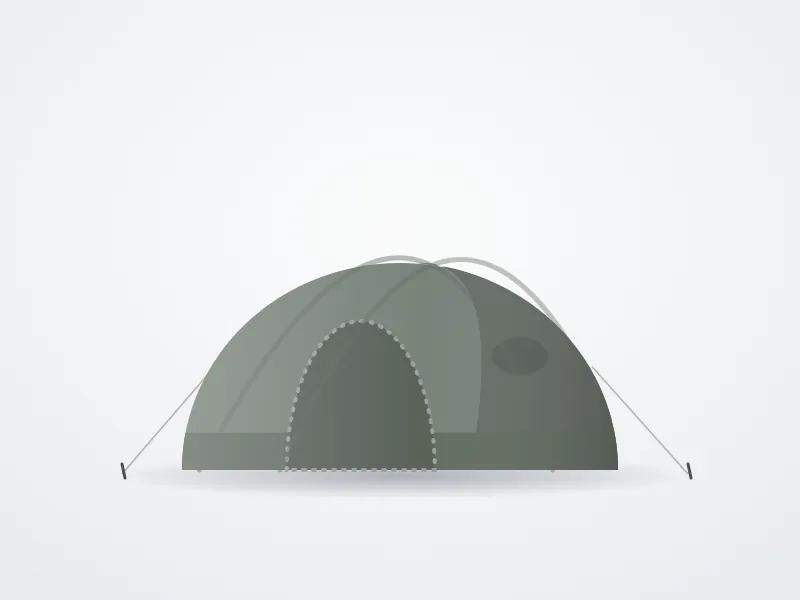
GEERTOP 2-person tent
Best rated
|
Value | See price |

Coleman Ridgeline 4 Plus
Our favourite
|
For 4 people | See price |
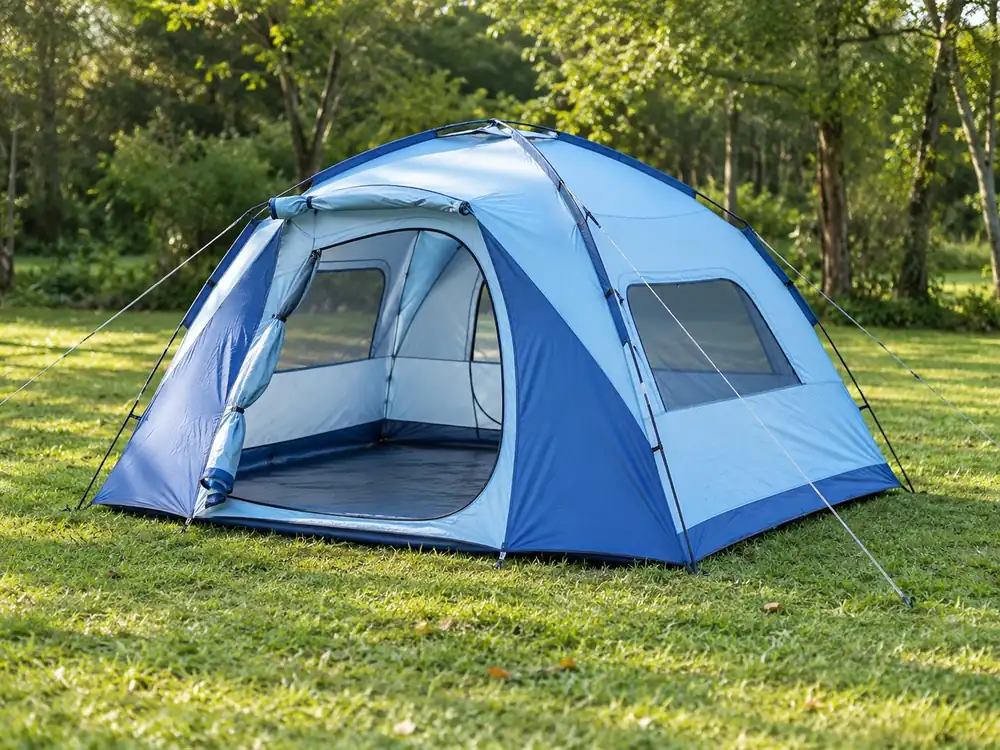
High Peak Zelt Nevada 3
Cheapest
|
Value | See price |
| Price | See price | |
| Pitching | See price |
Which one should I buy? Top 5 of 2026
Best rated 1. GEERTOP 2-person tent
The good
Value: what we like most is its excellent value for money.
Compact: packed in its bag, it takes up very little room in your luggage.
Good materials: the details are well made. The pegs are aluminium and you can feel their quality.
Weight: only 3 kg packed.
Easy to pitch: very simple to put up and take down.
2 people: perfect for two, or for travelling solo.
Worth knowing
Toughness: a few buyers had weather problems, but always in extreme places such as Iceland. For normal camping you won’t have that problem.
Condensation: some condensation in very cold winter weather.
Our favourite 2. Coleman Ridgeline 4 Plus
The good
For 4 people: perfect for 4, even 6 people.
Ventilation: outstanding airflow.
Materials: 100% polyester.
Easy to pitch: about 20 minutes. It is also very easy to take down and pack into its bag.
Worth knowing
Instructions: a little sparse.
Cheapest 3. High Peak Zelt Nevada 3
The good
Value: very good value for money.
Capacity: 3 people fit fairly comfortably.
Waterproof: it keeps the water out.
Spacious: a fairly roomy interior.
Pitching: quick and easy to put up and take down.
Worth knowing
Carry bag: a bit tight when packing it away.
Front: no groundsheet at the front.

4. Amazon Basics Tent
The good
Price: excellent value for money.
4 people: perfect for four.
Tough and waterproof: the fabric copes well with the weather.
Easy to pitch: very easy to put up and take down.
3 seasons
Ventilation: a rear window lets you control the temperature perfectly.
Worth knowing
Pitching: if it isn’t pitched properly, you may have problems on a windy day.

5. Coleman Darwin 3 Plus
The good
Pitching: very easy to put up and take down.
Mesh: separate from the porch, so the bedroom is always protected from mosquitoes.
Capacity: three people with luggage fit, a little snugly.
Toughness: very good in bad weather thanks to its quality materials.
Price: very good price for a high-end tent.
Worth knowing
Weight: a bit heavy at almost 5 kg.
What to consider when buying one
When buying a dome tent, the first thing to know is how many people will use it, and for how many seasons. As always, if you’re carrying a lot of gear, add one person to the number of people going: that way you’ll always have room to spare.
Think above all about comfort, both when travelling (as compact as possible and not too heavy) and when living in it once pitched. To do that, look at the following:
Price
Depending on the space, a dome tent will cost more or less. In the comparison above we show you the cheapest one in a good size for three people, the best rated and our favourite. Further down the page you’ll find the best dome tents for 6, 4 and 2 people.
As with everything, more quality and durability costs a little more. Don’t worry: our comparison takes all of this into account.
Space
When travelling with family or friends, what you’ll need most is the right amount of comfortable space, both for sleeping and for spending the day. Enough room for luggage, sleeping bags or airbeds, and space for everyone. Believe us, you’ll be glad of it.
Materials
Fabrics should be good quality, such as treated cotton or polyester. Poles should be fibreglass or another durable material, and pegs steel or aluminium (there are always exceptions, but that’s our advice).
Openings
Another important factor is the openings: windows and doors. You’ll have noticed that tents almost always have side openings or even secondary doors besides the main entrance. The more openings, the better you can control the temperature inside, and the better the tent. That said, it is often the manufacturer who decides how many are needed.
Also try to make sure each bedroom or compartment has its own opening, so whoever sleeps there can adjust the temperature. And, as always, mosquito nets are a must.
The best dome tents by brand
Coleman family tent

1. Coleman Trailblazer
The good
Quality: better than all the others.
Capacity: 5 people or more.
Seasons: 4 seasons.
Pitching: very quick and simple.
Worth knowing
Skandika family tent
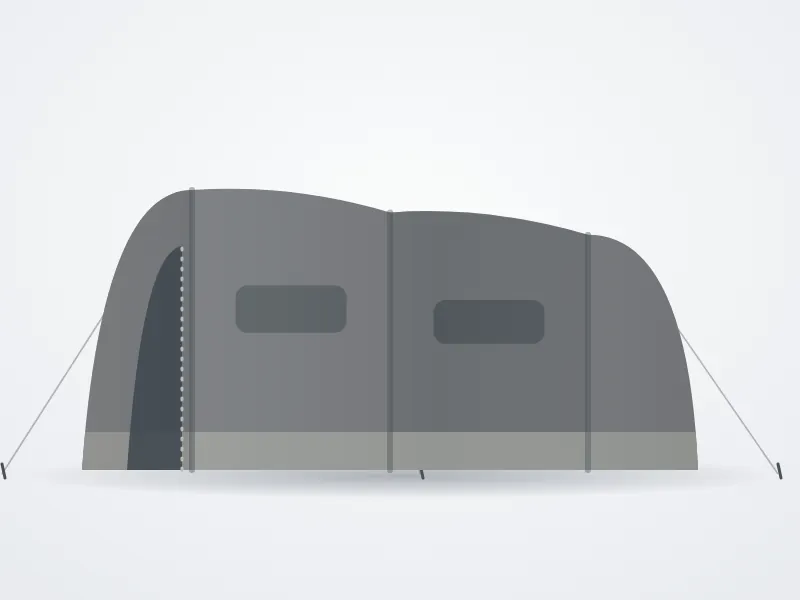
2. Skandika Daytona XXL
The good
Capacity: perfect for 6 people.
Generous size: very roomy, ideal with children.
Pitching: barely 20 minutes.
The price.
Worth knowing
Instructions: a bit sparse if it’s your first time camping.
A little heavy.
V Vontox family tent

3. V VONTOX Tent for 1-3 people
The good
Capacity: 12 people.
Price.
Perfect for festivals
Worth knowing
Seasons: 2 seasons
Very bulky
The best for 6 people

Skandika Hammerfest 6-person
The good
Capacity: 6 people, with two bedrooms that comfortably sleep two each.
Height: you can stand up in the middle.
Packing: folds back into its bag easily.
Worth knowing
Pitching: takes time the first time (about 1.5 hours, according to one buyer).
The best for 4 people

High Peak Nevada 4
The good
Capacity: 4 people; two 120 cm airbeds fit.
Light: about 4 kg including the bag.
Pitching: in about 10 minutes.
Price: affordable, ideal for family weekends.
Worth knowing
Use: designed for good weather, not for cold or tough conditions.
Groundsheet: a bit noisy when you move.
The best for 2 people
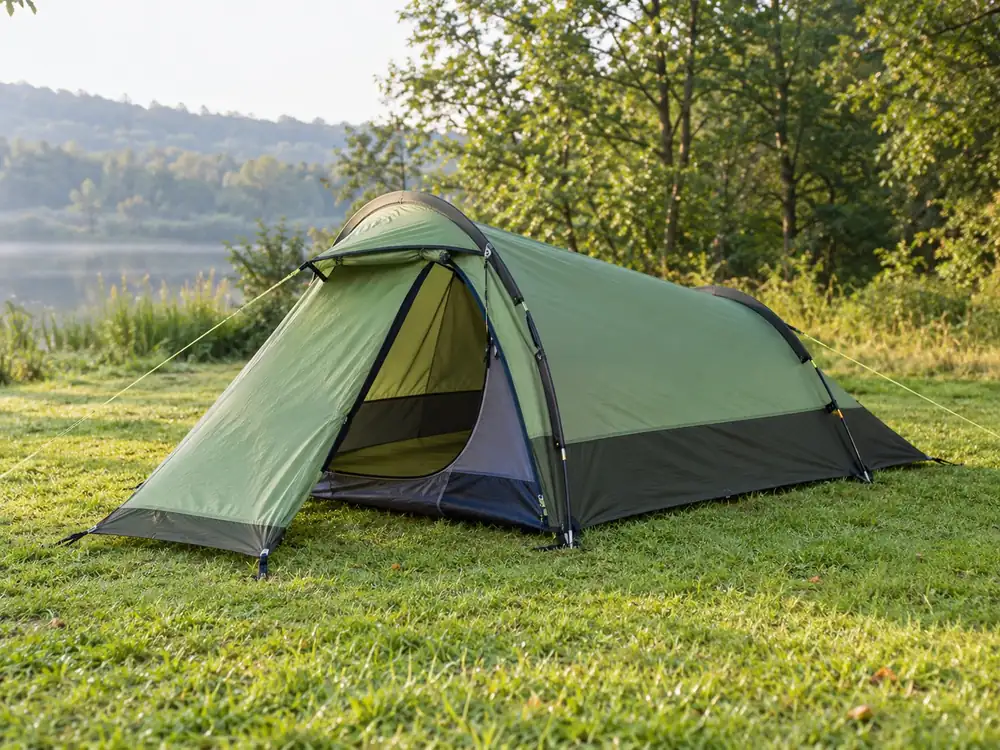
GEERTOP 2-person tent
The good
Price: a very good tent for the money.
Waterproof: four days of constant rain with no problems.
Pitching: very easy, and it can stand without pegs thanks to an extendable pole at the back.
Worth knowing
Space: snug for two, with little room for luggage.
How do you pitch a dome tent?
As with any type of tent, start by choosing the ground where you’ll pitch it. It should be flat, with a slight slope if possible so water doesn’t pool if it rains. Ideally, ground with little vegetation and no stones.
Once you’ve chosen the spot, clear anything that could damage the groundsheet, such as stones or sticks: besides damaging the tent, a small stone can be very annoying if you sleep on it (unless you have an airbed).
Next, take the tent out of the bag and unroll it, lining it up with the slope. Don’t peg it down yet: once it’s up you can choose the best position. Take out the poles, assemble them and start feeding them through the sleeves on the roof.
Once the poles are in, put one end into the eyelet at the base, then do the same with the other end of the same pole. You might think they’ll snap under the tension, but they won’t: they’re flexible and designed for it. Holding the pole in place, repeat with the crossing pole.
With the tent up, add any remaining poles, such as the porch pole, and now peg the base eyelets into the ground, keeping the tent as taut as possible (without overdoing it).
Finally, put the flysheet over the tent (if it has one) and fasten the Velcro tabs to the poles. Then tension the guy lines, tying them to something fixed or pegging them into the ground.
Your dome tent is up, and it’s taken barely 15 minutes. Don’t worry if it’s your first time and it takes longer: with practice you’ll get quicker.
Tip: if you can’t manage alone, ask a neighbour on the campsite for a hand, they’ll be happy to help. To sum up, here are the steps to remember:
- Choose flat ground, free of vegetation and stones, with a slight slope.
- Take out your tent and spread it over the chosen spot.
- Assemble the poles to raise the tent. Turn it and move it to the best position.
- Peg the tent to the ground.
- Fit the flysheet and tension the guy lines to pull the tent taut.
- Done!
Frequently asked questions
It’s a tent with crossed poles that stands on its own without pegs (although you should still anchor it). You can move it once pitched to find a better angle or ground.
A dome is more versatile and easy to pitch, ideal on hard ground. A tunnel gives more space for its weight and good wind stability with the same materials, but isn’t freestanding.
Rule of thumb: subtract 1 berth from the manufacturer’s figure to be comfortable and leave room for gear (a 3-person tent suits 2 well).
Width 120–140 cm, length 210–230 cm and height 100–115 cm. “+” or “XL” versions gain a few centimetres in width or height.
With practice, 5–10 min. Models with pre-connected poles or quick clips are faster than those with continuous sleeves.
Aluminium is lighter, more flexible and longer-lasting. Fibreglass is cheaper but tires sooner. For frequent use or changeable weather, go for aluminium.
As a guide for summer in southern Europe: flysheet 2,000–3,000 mm and groundsheet 3,000–5,000 mm, with taped seams and a proper double skin (flysheet separate from the inner).
They ventilate well if they have high and low vents, mesh and the right gap between flysheet and inner. Open two doors or the vestibule for cross-ventilation.
Yes, if you pitch it taut and use guy lines and quality pegs. For serious storms, some tunnels or geodesic domes cope better.
3-season: ideal from spring to autumn; better ventilated and lighter.
4-season: more enclosed and resistant to wind and snow; warmer and heavier in summer.
1.8 to 2.8 kg is a good range. Under 1.5 kg you’re into ultralight (more delicate materials and a higher price).
Inflatable pitches very quickly but is usually heavier and bulkier. For trekking, go for poles; for car camping, inflatable is convenient.
Check the pitched dimensions (length × width + guy lines). For 2–3 people a standard pitch is enough; avoid obstacles that stop you tensioning the guy lines.
Footprint (protects the groundsheet), premium pegs, reflective guy lines, a windbreak for the stove (outside the inner), a head torch or LED light and dry bags.
Dry it completely before packing, clean it with mild soap, avoid long UV exposure and store it loose (not compressed for weeks). Looked after, it will last several seasons.
Other types of tent you may like
 Best luxury tents
 Best Large Camping Tents of 2026
 Best cheap tents of 2026
 Best camping tents
 Best family tents of 2026
 Best tents for kids
 Best ridge tents
 Best tipi tents
 Best 2 Seconds pop-up tents
 Best tunnel tents
 Best camping gazebos
 Best inflatable tents
We choose products independently. If you buy through our links, Amazon pays us a small commission at no extra cost to you.