Best tipi tents
- Updated October 30, 2026
- 3 models compared
- 6 min read

Tipi or teepee tent for children
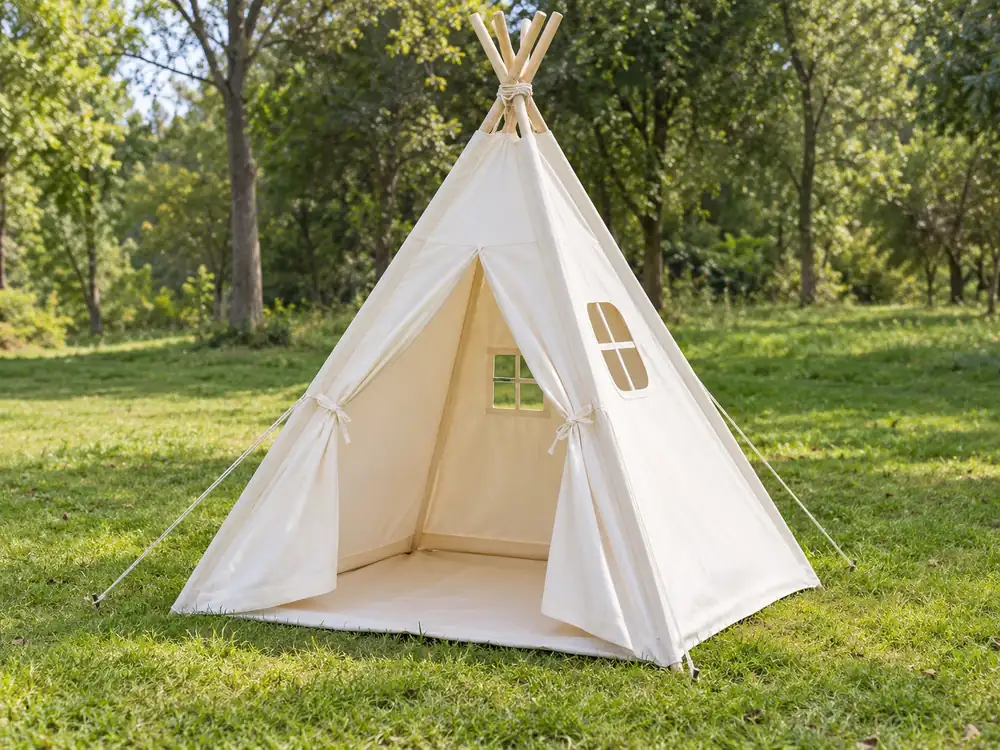
As we’ve written before, tipi or teepee tents are perfect for letting children’s imaginations run wild. Depending on the model, kids can use them indoors or outdoors, so you can also introduce your children to the wonderful world of camping while they have fun.
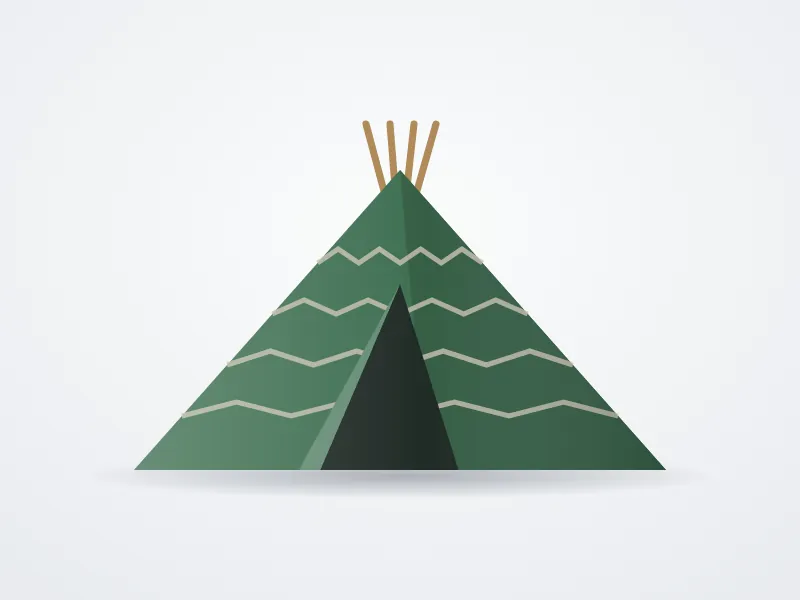
They are based on the old Native American tipi tents, copying their shape perfectly.
On this page we only cover tipi tents for children, as we think the adult version has become rather outdated for travelling, given its weight and its awkward pitching and transport.
With that said, let’s get started!
Best deals on children’s tipi tents on Amazon
Comparison of the best and cheapest of 2026
| Product | Stands out for | Price |
|---|---|---|
Peradix kids tipi tent
Our favourite
|
Pitching | See price |
SoBuy OSS03 children's tent
Cheapest
|
Size | See price |

Tiny Land kids tipi
Best rated
|
Materials | See price |
Which one should you choose? Top 3 on Amazon
Our favourite 1. Peradix kids tipi tent
The good
Pitching: easy to put up and foldable.
Breathable windows: good material to prevent condensation.
Materials: pine wood and cotton.
Worth knowing
Floor: the floor could be padded.
Cheapest 2. SoBuy OSS03 children's tent
The good
Size: large, with a pretty pattern.
Materials: polyester and pine wood.
Strength: sturdy, hard-wearing tent.
Pitching: very simple, no instructions needed.
Worth knowing
Stability: we’ve read a few comments about it not being very stable, but 95% of reviews are positive.
Joins: the walls aren’t attached to the floor.
Best rated 3. Tiny Land kids tipi
The good
Materials: very good quality, cotton and pine wood.
Design: we think the tipi shape is fantastic.
Base: padded, non-slip mat.
Lights: fairy lights included with the tent.
Worth knowing
Price: a bit expensive for our liking.
What to look for when buying a tipi tent
There are several things to consider when buying a tipi tent for children, and as you’ve seen, it isn’t easy given how many models are on the market. On this page we’ve shown you the tipis we like best and recommend for the quality of their materials, their looks and, above all, the child’s safety, as a poor-quality tent with faulty materials can cause harm. You can also have a look at other types of children’s tents here.
Here are some tips on what to look for when buying or giving a tipi tent for children.
Price
The good thing about tipis is that they’re not expensive compared with adult tents. You can find a good-quality one for between 45 and 100 euros. In our opinion, anything under €30 isn’t worth it.
In the comparison above, we show you the cheapest one that still offers perfect quality for little ones, the one rated highest by Amazon buyers and our readers, and our favourite.
Space
This is simple: think about how many children will use the tent. Remember they grow fast, so it’s worth buying one a bit bigger so it gets more use.
Materials
The materials should be good-quality fabrics and wood, such as cotton, pine or polyester. The base should protect against damp and cold, be padded (you can fix this by putting foam underneath) and, very importantly, have a non-slip surface to prevent slipping.
Openings
With children’s tents, openings to control the temperature aren’t usually a priority, but do make sure the main entrance is wide to avoid heat in summer and condensation.
Benefits of tipi tents for children
Play isn’t just a way of keeping children occupied: it also helps them develop skills and strengthens their learning and understanding of the world around them. So a key job for parents is to find the best toys and accessories.
A children’s tent is a place for play, letting little ones explore their creativity through role play and imitation, or get in touch with nature and the outdoors. It also encourages their imagination. Its benefits include developing children’s imagination, exploration, motor and cognitive skills and independence, and stimulating their physical, social and mental abilities.
If you set the tent up as a play area, toys will no longer be all over the house but in that one spot. Having a space of their own also encourages social relationships and a sense of responsibility.
Buying or giving a children’s tent has nothing but advantages.
How do you put one up?
It’s usually very simple and you won’t need instructions.
Depending on the manufacturer and whether the floor is attached to the walls, the steps vary a little, but they all have three wooden poles that you thread through openings in the fabric to give the classic tipi shape.
Finally, add a few cushions and toys to the tipi and let the fun begin.
Frequently asked questions
A children’s tipi is decorative and educational, for indoors (and sometimes the garden), designed for playing, reading or short naps. It isn’t made for sleeping overnight or for rain or wind. A children’s camping tent uses technical, waterproof fabrics and is for sleeping outdoors.
As a guide, 3+ years with adult supervision. For younger children, always use it with an adult present and with no small loose parts.
Typical children’s tipis are 120–160 cm tall with a 100–130 cm base. For 2 children, look for a base of at least 120×120 cm and a wide entrance.
Yes, on days without wind or rain. Anchor it with pegs or sandbags and add a waterproof mat. Don’t leave it outside permanently.
Generally not. Most are made for indoors. If you’ll use it outside, look for models with denser fabric, a separate floor and a water-repellent treatment. Even so, avoid rain.
Cotton or polyester fabric with non-toxic dyes and certifications such as EN 71, REACH or OEKO-TEX. Smooth, strong poles (splinter-free wood or smooth tubes).
For daytime play, choose fabrics with UPF 50+ and windows with mosquito mesh. Even so, they don’t replace proper shade; alternate play time and avoid the hottest hours.
Secure the poles with the top cord and, outdoors, use pegs or sandbags at the base. Indoors, put down a non-slip rug.
A padded rug or mat, cushions, storage pockets, low-heat LED fairy lights (with secure batteries) and a carry bag.
Shake off the dust and clean with a damp cloth and mild soap. Dry it completely before storing. Avoid bleach and harsh washing that can misshape the fabric.
Fold it without forcing the poles and store it in its bag somewhere dry, away from damp. If it got wet, dry it first to prevent mould.
It isn’t designed for overnight stays. Use it for play or short supervised naps. For sleeping, choose a suitable children’s camping tent.
Between 1.5 and 4 kg is usually manageable. If you’ll move it often, look for a quick-pitch system and a bag with handles.
Other types of tent you may like
 Best luxury tents
 Best Large Camping Tents of 2026
 Best cheap tents of 2026
 Best camping tents
 Best family tents of 2026
 Best tents for kids
 Best ridge tents
 Best dome tents of 2026
 Best 2 Seconds pop-up tents
 Best tunnel tents
 Best camping gazebos
 Best inflatable tents
We choose products independently. If you buy through our links, Amazon pays us a small commission at no extra cost to you.