Waterproof tent: how much hydrostatic head do you need?
- Updated November 5, 2026
- 4 models compared
- 7 min read

Almost every tent spec sheet shows a figure in millimetres: 2,000 mm, 3,000 mm, 5,000 mm… That’s the hydrostatic head (or water column), the measure of how waterproof the fabric is. But more millimetres doesn’t always mean a better tent, and a high figure is of little use if the seams aren’t taped.
In this guide we explain exactly what it measures, how much you need on the flysheet and how much on the groundsheet, and which other details decide whether you sleep dry on a stormy night. At the end you’ll find four tents whose hydrostatic head is listed in their spec sheet, from the toughest to the most basic.
Quick answer: how many millimetres you need
| Use | Flysheet | Groundsheet |
|---|---|---|
| Summer and good weather, weekends | 1,500–2,000 mm | 3,000 mm or more |
| Spring and autumn, steady rain | 3,000 mm | 5,000 mm or more |
| Rainy regions, mountains or long trips | 3,000–5,000 mm | 5,000–10,000 mm |
These are guide figures, not a standard: the standard that measures hydrostatic head (ISO 811) explains how to measure it, but doesn’t set a number of millimetres from which a fabric counts as waterproof. In practice, fabric is usually called waterproof from about 1,500 mm.
What is a tent’s hydrostatic head?
Picture a tube full of water standing on the fabric. The hydrostatic head is how tall that tube can be, in millimetres, before water gets through the fabric. A 3,000 mm fabric withstands the pressure of a 3-metre column of water.
In the lab nobody uses a 3-metre tube: water is pressed against a piece of fabric at ever higher pressure and the value is noted when drops appear on the other side. That’s the ISO 811 method, used by most European brands. So the figure measures pressure, not time: it doesn’t tell you how many hours of rain the tent can take, but how much force it takes for water to get through.
Rain, however heavy, puts far less pressure on the fabric than those 3 metres of water. What really pushes water through is wind driving it against the fabric, slack fabric where puddles form and, above all, your body weight on a wet floor.
Why the groundsheet needs more millimetres than the flysheet
When you kneel or sit inside the tent, all your weight is concentrated on a few centimetres of fabric lying on wet ground. That pressure is much higher than rain on the roof. That’s why good tents have double or more the flysheet’s hydrostatic head on the groundsheet: 5,000 mm or 10,000 mm are common figures.
If your tent’s groundsheet has a low rating, the cheap fix is a footprint or tarp underneath: it protects against damp and against rubbing on stones. Don’t let it stick out at the sides, or it will collect rain and channel it under the tent.
Are more millimetres always better?
Not quite. To raise the hydrostatic head, more coating (usually polyurethane, PU) is added to the fabric, which also makes it heavier and stiffer. Above roughly 3,000–4,000 mm on the flysheet, there’s little real gain.
Also, figures aren’t always comparable between brands. Some silicone-coated mountain fabrics show modest figures and are still very reliable, because the rest of the tent is very well made. And some cheap tents show very high figures and then leak through the seams. Hydrostatic head is an important figure, but not the only one.
What matters as much as hydrostatic head
- Taped seams. Every stitch is a hole. On a good tent, the flysheet seams are heat-taped on the inside. If the spec sheet doesn’t say so, be wary.
- Bathtub groundsheet. The floor rises a few centimetres up the sides before the first seam, so water running along the ground doesn’t get in.
- Flysheet down to the ground. The lower it comes, the less rain blows in from the side.
- Taut pitch. Slack fabric forms pockets where water collects and ends up touching the inner tent. Tension the guy lines well and re-tension them once the fabric is wet.
- Gap between flysheet and inner tent. If they touch, water gets through by contact even if the fabric is waterproof.
- Material. Polyester stretches less than nylon when wet, so it sags less in the middle of a downpour.
Leak or condensation?
Often the water that appears inside the tent doesn’t come from outside. We breathe out moisture while we sleep, and it condenses on the inside of the flysheet when it’s cool outside. In the morning the drops fall or wet your sleeping bag when it brushes the fabric.
The clue: if drops are spread all over the inside of the roof, it’s condensation. If water comes in through a seam, the base or one particular spot, it’s a leak. To fight condensation: open the vents even when it’s cold, don’t bring wet clothes into the bedroom and don’t fully close the porch if it isn’t raining.
How to keep your tent waterproof
A tent loses waterproofing over the years, especially if it’s stored badly. The most important thing is never to store it damp: mould damages the coating and the seam tape. If you pack it away wet, take it out and dry it at home as soon as you can.
Wash it only with water and mild soap, no washing machine or detergent (we explain how in how to clean a tent). If water no longer beads up and soaks into the fabric instead, you can restore the repellency with a tent spray. If a seam tape peels off, seam sealer fixes it in no time.
Where you pitch matters too: look for slightly raised ground, never the bottom of a dip, and point the door to the side sheltered from the wind (we explain how in how to orient a tent).
4 tents with a confirmed hydrostatic head
These are tents we’ve already reviewed in other guides, whose hydrostatic head appears in the spec sheet of the manufacturer or of the shop that sells them. They’re ordered from best prepared for rain to most basic.
 10,000 mm floor
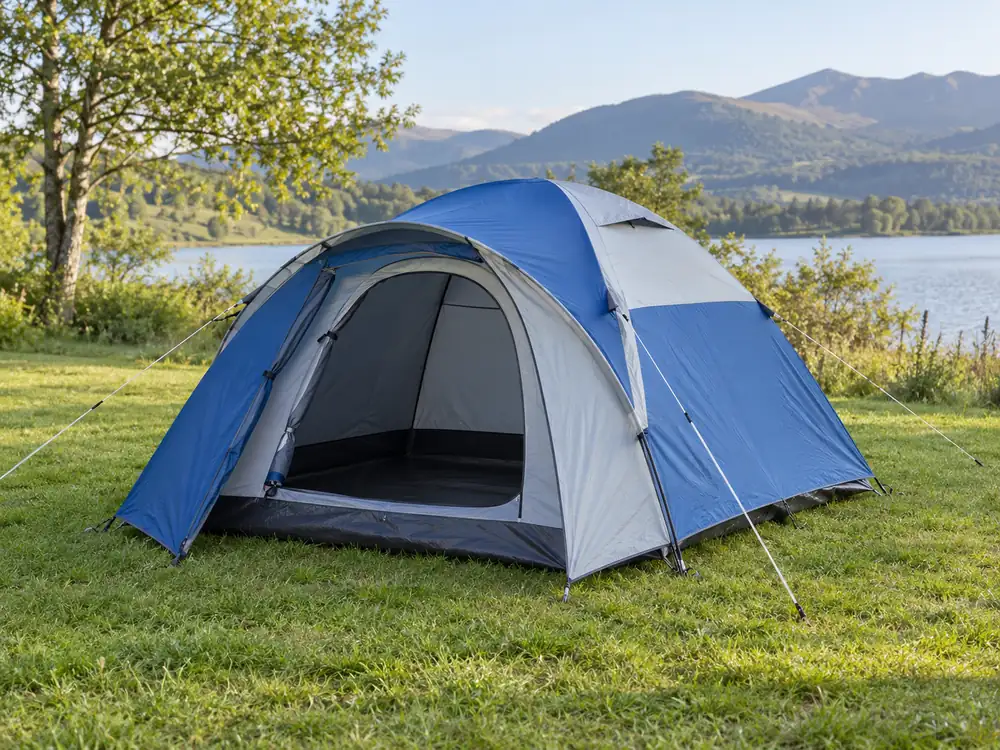
1. Justcamp Scott 4
The good
Waterproof: 3,000 mm on the flysheet and 10,000 mm on the groundsheet.
Light: about 4.5 kg for four berths.
Price: very good value for money.
Worth knowing
Space: a single bedroom, no living area.
Why we chose it
It has the most waterproof floor on this list: 10,000 mm, an unusual figure for a dome at this price. That’s exactly what you need if you camp on ground that gets waterlogged. We review it in depth in our Justcamp Scott review.
Our favourite 2. Coleman Ridgeline 4 Plus
The good
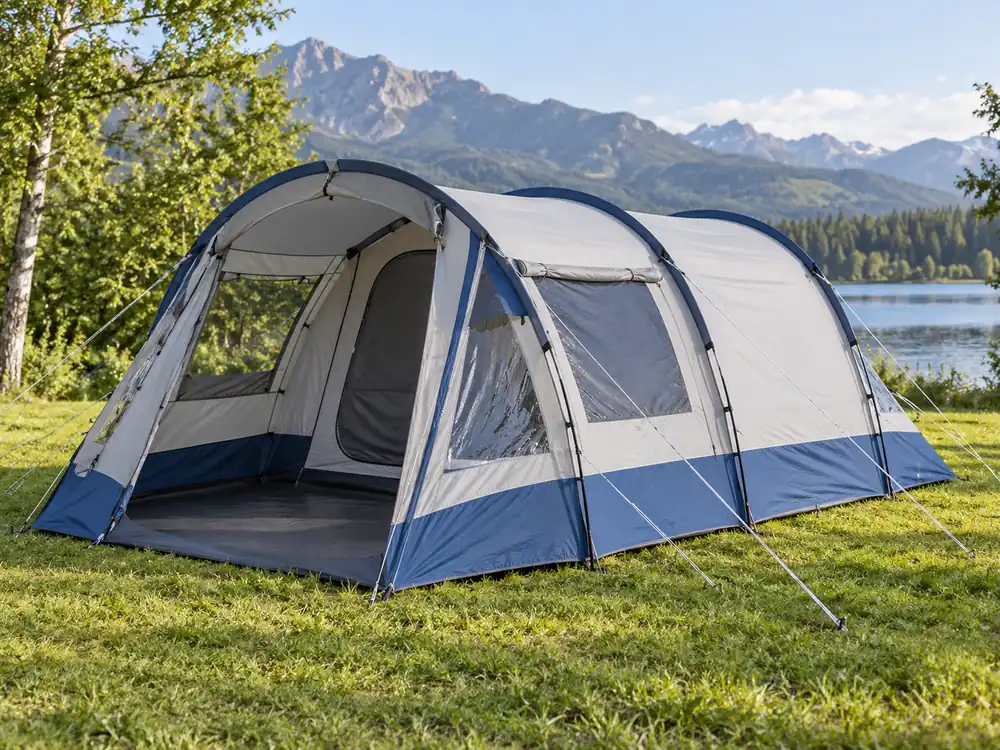
Rain: 3,000 mm flysheet with taped seams.
Wind: tunnel shape with a central dome, very stable.
Pitching: the flysheet goes up first, so the inside stays dry if it rains while you pitch.
Worth knowing
Weight: about 10.3 kg: it’s a tent for car camping.
Price: one of the most expensive on this list.
Why we chose it
This is the tent we travelled with for years. In Pechón (Cantabria, Spain), camped next to a cliff, we were hit by strong gusts of wind off the sea: the inflatable tent in front of us blew away and ours didn’t move. According to the Olimpiasport shop’s spec sheet, it has a 3,000 mm flysheet, a PE groundsheet with raised edges and taped seams.
3. Skandika Hammerfest 4
The good
Waterproof: 3,000 mm flysheet.
Two bedrooms: one on each side with the shared space in the middle, 2 m high.
Worth knowing
Pitching: the instructions could be better; the first time takes a little longer.
Why we chose it
Skandika lists a 3,000 mm flysheet, fibreglass poles and about 15 minutes to pitch. With its 2 m high central area, it’s a good option if you want a tent ready for steady rain where you can stand up while it pours outside.
 For summer
4. High Peak Nevada 4
The good
Price: the cheapest on the list.
Seams: taped on the polyester flysheet.
Worth knowing
Rain: 2,000 mm flysheet: fine for showers, borderline for long storms.
Why we chose it
According to Lidl’s spec sheet, it has a 2,000 mm polyester flysheet with taped seams. It’s a good example of a fair-weather tent: more than enough for summer weekends, but for whole weeks or very rainy areas we’d choose a 3,000 mm one.
Frequently asked questions
That the fabric withstands the pressure of a 3-metre column of water before water gets through. It’s a good figure for a flysheet: it copes with steady rain.
Fabric is considered waterproof from about 1,500 mm. For the flysheet, 2,000 mm is fine in summer and 3,000 mm if you expect rain. For the groundsheet, 5,000 mm or more.
For summer and showers, yes, if the seams are taped and you pitch it taut. For several days of rain or a rainy region, 3,000 mm is better.
Most often it’s condensation, not a leak. If water comes in at one spot, check the seams, that the flysheet doesn’t touch the inner tent and that the footprint doesn’t stick out.
Yes. A tent repellent spray brings back the beading effect, and seam sealer fixes peeling seam tape. If the inner coating is sticky or flaking, the fabric can’t be saved.
It isn’t essential, but it protects the floor from abrasion and damp and makes it last longer. Don’t let it stick out from the sides of the tent.
Other guides you might like
- Types of tents: dome, tunnel, ridge, inflatable…
- Best 4-person tents: with the hydrostatic head of each one.
- Best family tents: if there are more of you or you want a living area.
- Best 2-person tents: for couples or trekking.
 Best luxury tents
 Best Large Camping Tents of 2026
 Best cheap tents of 2026
 Best camping tents
 Best family tents of 2026
 Best tents for kids
 Best ridge tents
 Best dome tents of 2026
 Best tipi tents
 Best 2 Seconds pop-up tents
 Best tunnel tents
 Best camping gazebos
 Best inflatable tents
We choose products independently. If you buy through our links, Amazon pays us a small commission at no extra cost to you.