How to stay warm in a tent: 8 tips that really work
- Updated November 6, 2026
- 5 models compared
- 9 min read

Being cold at night is the quickest way to ruin a camping trip. And it can almost always be fixed: the problem is rarely the tent, but the ground, the wrong sleeping bag or what you do before getting into it.
In this guide we explain where heat escapes, which kit makes the difference and the tips that really work for sleeping warm in autumn and winter. And an important warning: never use a stove, a gas heater or a brazier inside a closed tent. We explain why further down.
In short: what makes the biggest difference
- Insulate the ground: the cold comes from below. Use a mat with an R-value of 4 or more in winter.
- Choose your sleeping bag by its comfort temperature, not the extreme one, with a 5 °C margin below the expected low.
- Sleep in dry clothes, never in the ones you sweated in during the day.
- Eat a hot meal and don’t go to bed cold: a sleeping bag keeps heat in, it doesn’t make it.
- Pitch in the right spot: sheltered from the wind and never at the bottom of a valley.
- Ventilate a little so condensation doesn’t soak your bag.
Where heat escapes in a tent
Tent fabric blocks wind and rain but barely insulates against the cold. The heat you lose at night goes three ways:
- Through the ground. Lying down, you squash the sleeping bag filling underneath you and your body is almost in direct contact with the cold ground. It’s the biggest loss and the one people most underestimate.
- Through the air. Draughts and the cold air around the bag carry heat away bit by bit.
- Through moisture. Sweaty clothes, the vapour from your breath and condensation dampen the bag, and a damp bag is much less warm.
So the tips that work tackle these three fronts. Let’s start with the most important.
1. Insulate the ground first
If you can only improve one thing, make it this. A mat’s insulation is measured by its R-value (a standard, ASTM F3340, makes brands comparable): the higher, the warmer. As a guide, an R-value of 1–2 is for summer, 3–4 for spring and autumn, and 4 or more for winter.
Thick camping airbeds without internal insulation are very comfortable but cold: the air inside cools down and steals heat all night. If you use one, put a foam mat or a thick blanket under or on top of it. Layering two mats (foam + self-inflating) is the classic winter-camping trick: R-values add up.
Therm-a-Rest Trail Pro
The good
Insulation: R-value above 4 according to Therm-a-Rest, made for cold nights.
Self-inflating: it almost inflates itself when you open the valve; a few breaths top it up.
Comfort: about 5 cm thick, far more comfortable than a foam mat.
Worth knowing
Price: one of the most expensive mats on this list.
Packing: it takes a bit longer to roll up than to inflate.
Why we recommend it
This is the mat we’d take for autumn and winter camping: it really insulates you from the ground and is comfortable for side sleepers. If you normally use a basic airbed, this is the piece of kit you’ll notice most.
Therm-a-Rest Z Lite Sol
The good
Indestructible: closed-cell foam: it can’t puncture or deflate.
Light: about 410 g and folds like an accordion.
Two jobs: under the self-inflating mat it adds its insulation (R-value 2.0) and protects it from punctures.
Worth knowing
Bulk: it’s bulky and usually goes on the outside of your pack.
On its own: not enough as your only mat in winter.
Why we recommend it
It’s the classic folding foam mat and the perfect partner for the one above: together their insulation adds up. It also works as a seat around camp or under an airbed.
2. Choose the right sleeping bag
Sleeping bag labels (EN ISO 23537 standard) give three temperatures, and only one is useful for choosing:
- Comfort: a person who tends to feel the cold sleeps comfortably at this temperature. This is the one to look at.
- Limit: a person who copes better with cold sleeps curled up without suffering. You’re already cutting it fine.
- Extreme: it only indicates the risk of hypothermia. It’s not a temperature to sleep at.
Rule of thumb: look for a comfort temperature about 5 °C below the lowest you expect. A mummy bag (with a hood that closes around your face) is warmer than a rectangular one with the same filling, because there’s less air to heat. A sleeping bag liner adds a few degrees and keeps the bag clean.
Naturehike Snowbird Pro 400
The good
Temperature: comfort rating of about 0 °C according to Naturehike.
Down: lots of warmth for its weight and packs down small.
Mummy shape: with an adjustable hood around your face.
Worth knowing
Damp: down insulates less when wet: keep it dry and ventilate the tent.
Price: more expensive than a synthetic bag.
Why we recommend it
It’s a down mummy bag with a comfort rating close to 0 °C, enough for autumn and mild winters at low-altitude campsites. For nights below freezing, look for a comfort rating of -5 °C or lower.
Sea to Summit Reactor Thermolite
The good
Extra warmth: the maker claims up to 8 °C more; in practice it adds a few degrees.
Hygiene: keeps your bag clean inside and is easy to wash.
Light: small and light to carry.
Worth knowing
Claim: don’t expect the full 8 °C: count on a lot less.
Why we recommend it
A thermal liner is the cheapest way to stretch the season of a sleeping bag you already own. It won’t turn a summer bag into a winter one, but it helps on chilly nights.
3. Sleep in dry clothes, in layers
Before getting into your bag, change: the clothes you walked or cooked in hold moisture, even if you can’t feel it. Go for a long-sleeved thermal base layer, clean thick socks and a hat. You lose a lot of heat through your head, and in a mummy bag a hat makes a real difference.
Don’t put on every piece of clothing you have: if the bag is tight, the filling gets squashed and insulates less. And don’t breathe with your head inside the bag: the vapour dampens it from the inside.
4. Warm up before bed
A sleeping bag doesn’t generate heat: it keeps the heat you bring. If you get in already frozen, it’ll take hours to warm up. Before going to sleep:
- Have a hot meal with some fat or carbohydrates. Your body produces heat while digesting.
- Move a little (a few squats, a short walk) to warm up, without breaking a sweat.
- Avoid alcohol: it feels warming because it dilates the blood vessels in your skin, but it makes you lose heat faster.
- Go to the toilet before bed: getting up in the middle of the night and climbing back into the bag is the quickest way to get cold.
5. A hot water bottle in your sleeping bag
It’s the cheapest trick and one of the best: fill a heat-resistant bottle with hot water (not boiling), close it tightly, put it in a sock and place it at your feet or between your thighs. It stays warm for much of the night. Check at home first that your bottle doesn’t leak or warp with the heat.
Chemical hand and foot warmers also help for the first few minutes, but always follow the manufacturer’s instructions and don’t put them directly against your skin.
Nalgene Wide Mouth 1 L
The good
Handles heat: BPA-free Tritan; the maker says it can take hot water.
Leak-proof: screw cap that seals tightly.
Wide mouth: easy to fill and clean.
Worth knowing
Price: dearer than an ordinary bottle, but it lasts for years.
Why we recommend it
This is the bottle many campers use as a hot water bottle: it handles hot water and seals well. By day it’s your water bottle; at night it goes in your sleeping bag.
6. Pitch your tent in the right spot
Cold air is heavier and sinks: at night it collects at the bottom of valleys, in hollows and next to rivers, where it can be several degrees colder than a little higher up. Look for slightly raised ground sheltered from the wind, for example behind a wall, a rock or a line of trees (but don’t camp under dead branches).
Point the door away from the wind and think about where the sun will rise: the first morning sun helps a lot. We explain this in more detail in how to orient a tent.
7. Ventilate, even if it seems counterintuitive
Closing everything seems logical, but in a sealed tent the moisture from your breath condenses on the flysheet and ends up dripping onto your bag. Leave the vents open, at least a little, and don’t bring wet clothes or boots into the bedroom.
A double-skin tent with a good gap between the two layers insulates better and handles condensation better. If your tent gets wet inside, our waterproof tent guide explains how to tell a leak from condensation.
8. A smaller tent warms up faster
Your body slightly warms the air in the tent. In a big, half-empty tent that heat is lost; in a tent sized for the number of people, you notice it more. If there are several of you, sleeping close together helps too. Large porches and living areas are great in summer, but in winter it’s best to close them so the wind doesn’t reach the bedroom.
Heating a tent: what you must never do
Never use a stove, a gas, petrol or wood heater, or a brazier inside a closed tent, not even “just for a moment” to warm it up. They produce carbon monoxide, a gas you can’t see or smell that can be fatal in a small space, on top of the fire risk.
If you want heating, the safe option is an electric heater on a pitch with a hook-up, with tip-over protection and kept away from the fabric. We explain it in tent heating. Without electricity, the answer is insulation: a good sleeping bag, a good mat and the tips in this guide.
Warning signs: when the cold becomes a problem
Feeling a bit cold is uncomfortable; hypothermia is dangerous. If someone is shivering uncontrollably, is clumsy, confused, has slurred speech or, on the contrary, stops shivering even though it’s still cold, you need to act: get them somewhere warm, remove wet clothing, cover them up and give them warm, sugary drinks if they’re conscious. If they don’t improve or are confused, call 112 (999 in the UK). With children, check on them during the night: they kick off their covers and don’t always say anything.
Kit that makes the difference
You don’t need high-mountain gear to camp in autumn or a mild winter. These are the items that make the biggest difference, in order of importance:
- Winter self-inflating mat: look for an R-value of 4 or more.
- Foam mat: cheap, light and perfect as a second layer under the other one.
- Winter sleeping bag: with a comfort rating of 0 °C or lower if you’ll sleep near freezing.
- Sleeping bag liner: adds a few degrees and keeps your bag clean.
- Hat and thermal socks: the two places where you feel the cold most.
- Hot water bottle: heat-resistant, with a screw cap that seals tightly.
The links take you to an Amazon search with the criteria we recommend, so you can compare prices and reviews.
Frequently asked questions
Almost always because of the ground. Lying down squashes the filling underneath you and you lose heat to the cold ground. Use a well-insulated mat (R-value of 4 or more in winter).
Look at the comfort temperature, not the extreme one, and pick one about 5 °C below the expected low. For nights around 0 °C, a bag with a comfort rating of 0 °C or lower.
Dry clothes: a thermal layer, socks and a hat. Too many clothes make the bag tight and squash the filling, so it insulates less.
Only an electric one, with a hook-up, tip-over protection and away from the fabric. Never gas, petrol, wood or a brazier: they produce carbon monoxide.
Leave the vents open, don’t breathe inside the bag and don’t bring wet clothes or boots into the bedroom.
Only with extra insulation. An uninsulated airbed gets cold at night. Put a foam mat or a thick blanket between you and the airbed.
Other guides you might like
- Tent heating: which options are safe.
- Waterproof tent: how much hydrostatic head you need.
- How to orient a tent: wind, sun and rain.
- Best 4-person tents.
 Best luxury tents
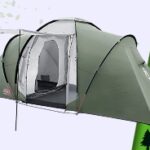 Best Large Camping Tents of 2026
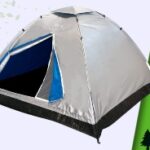 Best cheap tents of 2026
 Best camping tents
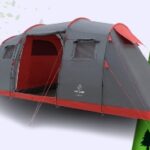 Best family tents of 2026
 Best tents for kids
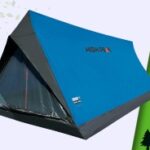 Best ridge tents
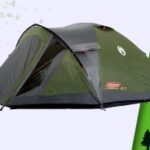 Best dome tents of 2026
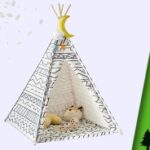 Best tipi tents
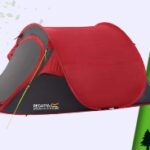 Best 2 Seconds pop-up tents
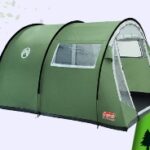 Best tunnel tents
 Best camping gazebos
 Best inflatable tents
We choose products independently. If you buy through our links, Amazon pays us a small commission at no extra cost to you.